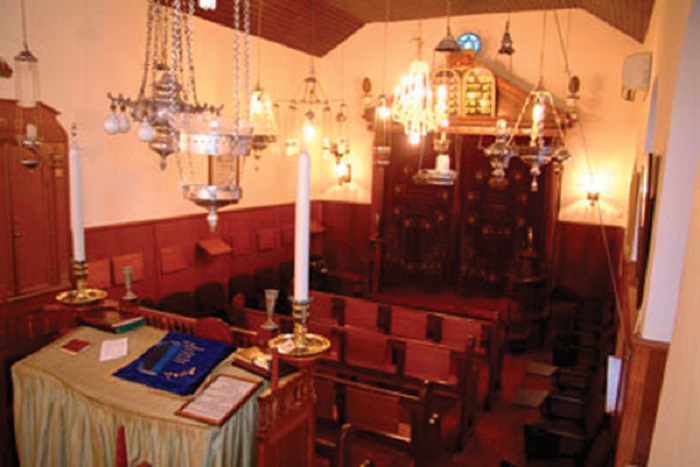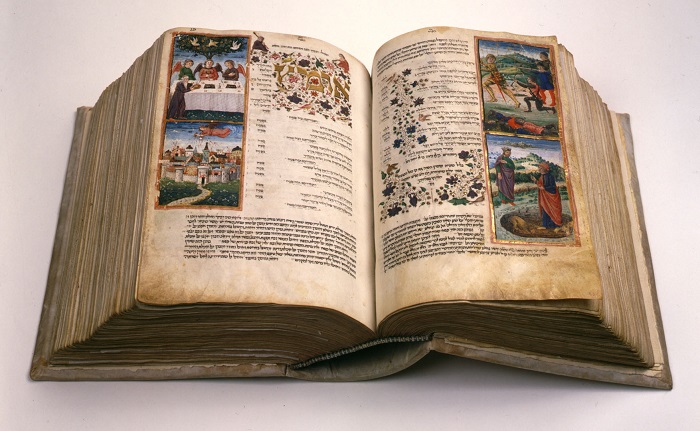
ENGLISH CORNER, CON LINDA JIMÉNEZ – This story, which is a classic, has been translated many times. This version was translated by Eli Katz and is from the anthology Prophets and Dreamers, edited by Miriam Weinstein and published by Steerforth Press in 2002.
ABOUT THE AUTHOR
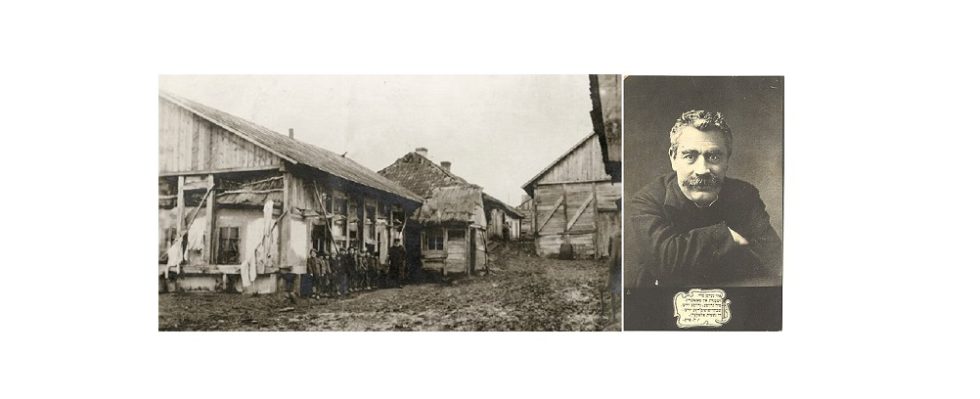
Peretz is considered to be one of the three great classical Yiddish writers, along with Mendele Mokher Seforim and Sholem Aleichem. He was born in Zamoshtch, Poland, in 1852, and raised in an Orthodox Jewish home of Sephardic origin. At the age of 15 he joined the Haskalah, the Jewish enlightenment movement and began a deliberate plan of secular learning, reading books in Polish, Russian, German, and French. He soon began to write poetry, songs, and stories in Hebrew. His first poem in Yiddish, a ballad called “Monish”, was not written until 1888. From that time until his death twenty-seven years later, Peretz wrote hundreds of Yiddish stories, poems, plays, articles and songs for children.
In 1889 he settled in Warsaw, where he became the teacher and guide for many young Yiddish writers, who came to him for criticism and advice. Between 1894 and 96 he published a series of magazines called “Di Yontov Bletlech”, the Holiday Papers, on the occasion of each Jewish holiday. They included stories and poems as well as articles on political, scientific and cultural topics. He was a writer of social criticism, sympathetic to the labor movement, and was arrested and imprisoned by the Czarist police while reading one of his stories to a gathering of Jewish workers.
Between the years 1899 and 1914, Peretz wrote his famous Folk Tales and his Hasidic Tales. After the outbreak of World War I in 1914, and until his death the following year, Peretz devoted his entire energy to the children’s community homes and schools which were established in Warsaw for the thousands of homeless and orphaned children who were victims of the war. During that year he wrote many poems and songs for children.
Peretz died in Warsaw in 1915. There are streets named after him in both Zamoshtch and Warsaw in Poland, in several cities in Israel, and Peretz Square, in lower Manhattan, was dedicated in November, 1952.
ABOUT THE STORY-SOME CULTURAL BACKGROUND
The story takes place in a community of Hasidic Jews. Hasidism is a branch of Orthodox Judaism that originated in 18th-century Eastern Europe and emphasizes piety, joy, and emotional and spiritual devotion to God. Their leaders, called rebbes (not “rabbis”) are often organized into dynasties, and referred to by the town they come from, Nemirov, in this story. Litvak Jews, originally from the region of Lithuania, prioritize intellectual Torah study and rigorous scholarship. They are stereotyped as cerebral and hyper-rational, and opponents to the Hasidim. These conflicting trends are often present in Eastern European Jewish folklore and literature of the 18th and 19th centuries. The “Days of Awe” are the ten days starting with Rosh Hashanah and ending with Yom Kippur, the holiest days of the Jewish year.