ENGLISH CORNER, CON LINDA JIMÉNEZ – This week’s trivia question: How were conversos’ ideas about Christianity different from those of Old Christians and the established Church?
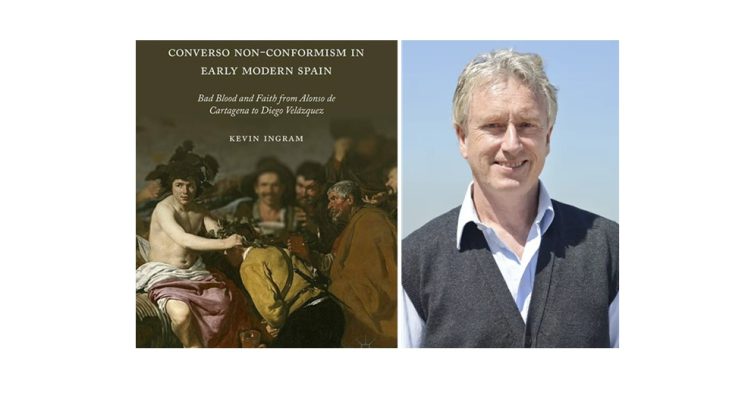
Kevin Ingram was born in Sheffield England in 1956. He studied history at the University of Sussex, where he received his B.A., and went on to receive an M.A. and PhD in history from the University of California, San Diego. After relocating to Spain, Ingram taught at Saint Louis University’s Madrid Campus from 2003 until his retirement in 2023.
In his book, Converso Non-Conformism in Early Modern Spain: Bad Blood and Faith from Alonso de Cartagena to Diego Velázquez, Dr. Ingram argues that Spain’s early modern social and religious reform movements were driven by conversos, descendents of Jews who were forced to convert to Christianity in the late 14th and 15th centuries.
He notes that many of Spain’s great early humanists, mystics and evangelists (including the early Jesuits) came from converso backgrounds. In contrast to the traditional view, in which Spain’s 16th and 17th century Golden Age was presented as an Old Christian cultural phenomenon, Dr. Ingram maintains that this period of intellectual fervor and religious tension was inspired by a small minority of converso intellectuals who challenged the norms and prejudices of their society.
This week Dr. Ingram is speaking with us about the important role of conversos in Early Modern Spain.