ENGLISH CORNER, CON LINDA JIMÉNEZ – This week’s trivia question: What are the differences between the Sephardic and Spanish versions of this endecha?
This week is Tisha B’av, the ninth day of the month of Av. It is the saddest on the Jewish calendar, commemorating the destruction of the First and Second Temples. The date is also associated with numerous other historic calamities for the Jewish people, including the expulsions from England, France and Spain in the 13th to 15th centuries, the start of mass deportations from the Warsaw Ghetto in 1942 and the bombing of the AMIA Jewish community center in Buenos Aires in 1994. The day is observed as a day of communal mourning with a 25-hour fast and abstaining from washing or bathing for pleasure; applying lotions, creams, or oils; wearing leather shoes; and engaging in sexual relations. The Book of Lamentations, which mourns the destruction of Jerusalem, is read in synagogue, followed by the recitation of kinnot, liturgical dirges that lament the Israelites’ loss of the Temples and Jerusalem.
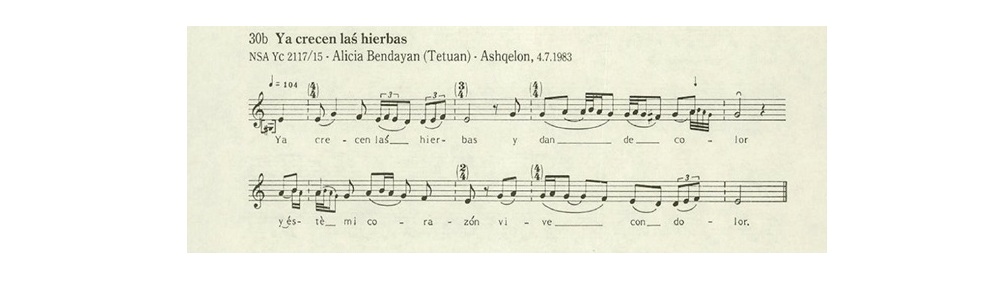
The endecha is a special genre within the repertoire of Sephardic music in Judeo-Español. It is a song of mourning that is sung especially on Tisha B’av. Henar Cabrero is a singer and professor of music at a Conservatory in Madrid. She has studied Sephardic music and culture in depth and the theme of her Master’s thesis was one of these songs. This week she is speaking with us about endechas, their relationship to medieval Spanish music, and the object of her specific studies, the endecha Ya crecen las hierbas, The Grasses are Now Growing. At the end of the interview she will sing it for us, and you can read the original text and the English translation below.