ENGLISH CORNER, CON LINDA JIMÉNEZ – This week’s trivia question: What was Beregovsky accused of by Stalin’s government? And what was their rationale for doing so?
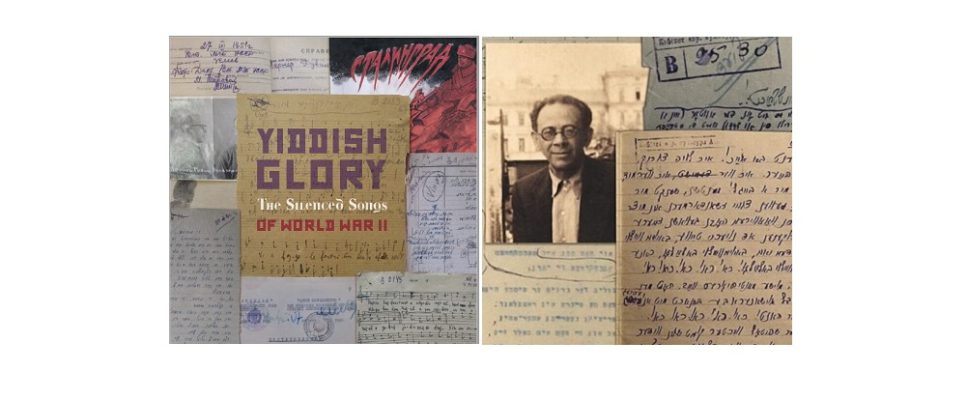
During the 1940s, ethnomusicologist Moisei Beregovsky (1892 – 1961) led a group of scholars in the discovery of a collection of songs that had been written by a wide range of people who had witnessed the horrors of World War II in Eastern Europe and Russia. It included pieces by Jewish Red Army soldiers, refugees, victims and survivors of Ukrainian ghettos, including a 10 year old orphan, a teenager prisoner of a concentration camp, and many more.
The sizable archive that he and his colleagues had amassed during and immediately after the Shoah — 263 original songs in all, constituting a record of a culture on the brink of oblivion — languished in the basement of a Kyiv library until it was discovered by chance in 1990.
Two or so decades later, a group of archivists, academics and musicians — led by Anna Shternshis, professor of Yiddish studies at the University of Toronto — took up Beregovsky’s task, and out of the jumbled archive they pieced together an album of Yiddish songs. The majority of the archive consisted of just lyrics (that is, without sheet music) so Shternshis teamed up with Russian songwriter Psoy Korolenko to compose new melodies, taking care to match the music to the lyrics’ subject, period and geographic origin. The resulting album Yiddish Glory: the Lost Songs of World War II was released in February, 2018. It was hailed as a spectacular insight into the experiences of Holocaust-era Soviet Jewry and was nominated and shortlisted for the 61st Annual Grammy Award in the world music category.
Now, seven years later, Shternshis and her collaborators have released a second album: Yiddish Glory: The Silenced Songs of WWII. The songs on this album represent rare Jewish testimonies of atrocities that took place in parts of Ukraine and Poland. Each song on the album was selected because it challenges the established knowledge of history of the Holocaust, often written by the sole survivor from an entire community which was massacred. Silenced Songs is more than just anguish, though; there’s uplift, too, the same injections of hope, levity and defiance that you can hear on the first album.
Anna Shternshis is the Director of the Anne Tanenbaum Centre for Jewish Studies and the J. Richard and Dorothy Shiff Chair of Jewish Studies at the University of Toronto. She is a distinguished scholar with an international reputation for her expertise in Jewish culture in Russia and the Soviet Union, oral history as well as Yiddish music. We spoke with her about the first volume of Yiddish Glory when it was released in 2018, and you can listen to that program here. This week she is speaking with us about the new album, Yiddish Glory: The Silenced Songs of World War II.
I AM A TYPHUS LOUSE–BIN IKH MIR A TIFUS LOYZ
|
Me, I am a typhus louse and I go from house to house tra-la-la-la-la As soon as I show up there, you have to go into quarantine tra-la-la-la-la-la After three years of visiting you, I’m feeling old and weak tra la la la la la But to tell you the truth as if from the Torah, I’m afraid of the (Germans/doctor) tra-la-la-la-la Of the Germans, oy, the murderers, and the Cossacks with their smell tra la la — Suddenly, word goes around that you’re being sent home tra-la-la-la-la Well, safe travels on your journey; I’ll turn my attention to the enemies tra-la… |
bin ikh mir a tifus-loyz gey ikh mir fun hoyz tsu hoyz tra-la-la-la-la vi ikh kum nor dort tsu geyn iz shoyn ba aykh karanteyn tra-la-la-la-la-la dray yor geyendik tsu aykh fil ikh mir shoyn alt un shvakh tra la la la la la nor der emes fun der toyre far dem (daytsh/dokter) hob ikh moyre tra-la-la-la-la far dem daytsh oy dem roytseyekh un di kozakn mit der reyekh tra la la — plutsem lozt men aroys a shem az men shikt aykh gor aheym tra-la-la-la-la nu fort zhe mir gezunt fun danen ekh vel mikh nemen tsu di sonim tra-la… |
A PRIEST WAS MURDERED IN KALISZ
|
I will tell you a sad story about the city Kalisz, a city in Poland – how Hitler wanted to eradicate the Jews and wash his hands clean, but he didn’t succeed. The foolish German[s] wanted to start a pogrom against Jews using a Polish priest from the town Chocz Forty kilometers by foot, exhausted, weakened, the slaughterer[s] brought the priest to Kalisz. With bound eyes they led him, and here is what happened to him: In front of a large crowd, they stood him against a wall, along with four Jewish boys. They forced the four Jewish boys to shoot the priest. They forced them to carry the priest away and bury him in the Jewish cemetery… The Poles saw all of this, but no pogrom happened. Afterwards, the Germans captured everyone; they shot some and hanged others. Others they drove to Germany for forced labour. I remained alive by a miracle. I escaped to the Russian border; the German bullets didn’t hit me. |
fun der shtot kalish, a shtot aza in poyln a troyerike mayse vel ikh aykh dertseyln. viazoy hitler hot gevolt di yidn oysrotn, un zikh di hent reynvashn, nor s’hot im nit gerotn. a pogrom af yidn hot gevolt der narisher daytsh durkh a poylishn ksyondz funem shtetl khatsh. fertsik kilometer tsufus, tsebrokhn, farshmakht hot der koyler dem ksyondz keyn kalish gebrakht. mit farbundene oygn hot men im gefirt, un do ot vos mit im hot pasirt: far a groysn parad geshtelt im tsu der vant, mit im fir yidishe yungen banand. tseshisn dem ksyondz hot men getsvungen di yidishe fir yungen. zey zoln dem ksyondz avektrogn afn yidishn beysoylem bagrobn… di polyakn hobn dos alts gezen, nor keyn pogrom iz nit geshen. nokhdem hobn di daytshn alemen gefangen vemen geshosn un vemen gehangen. vemen af katorge keyn germanye fartribn. ikh bin durkh a nes lebn geblibn. tsu der rusisher grenets bin ikh antlofn, di daytshishe koyln hobn mikh nit getrofn. |